Bayati on D
D, E half-flat, F, G, A, B flat, C, D.
Your gateway to discovering Arabic music: sheet music, maqam guides, and Arabic rhythms.
Try a maqam and a rhythm, then explore the full guides.
D, E half-flat, F, G, A, B flat, C, D.
Before Musicatea became an educational project, it was an extension of a personal journey with the oud. In this space, I offer a tribute to six oud players who left a deep mark on my listening, learning, and way of thinking about music: from memory and gratitude to teaching, experimentation, and melodic imagination.
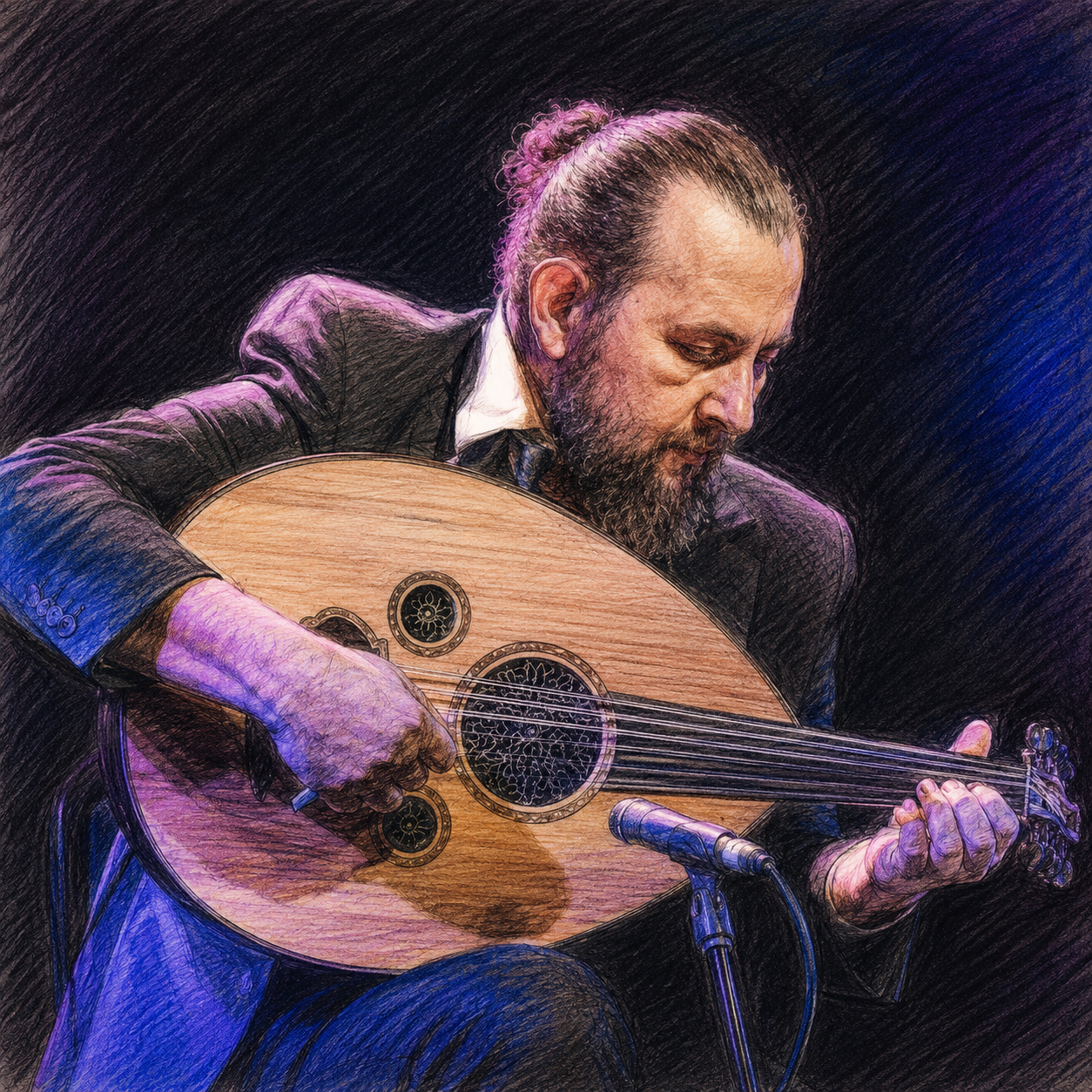
A tribute to the Syrian oud player who carried a rare, personal technique and a musical mind unlike anyone else. Nazih Abu Rish left an effect on the oud that cannot be reduced to speed or skill alone; what reached me from his playing was a special way of touching the string, as if the plectrum searched for an inner sound before announcing the phrase. He left early, but his influence remained present as a school and a style of playing. From him, I learned that technique is complete only when it becomes personal, and that sensitivity can be a full musical force.
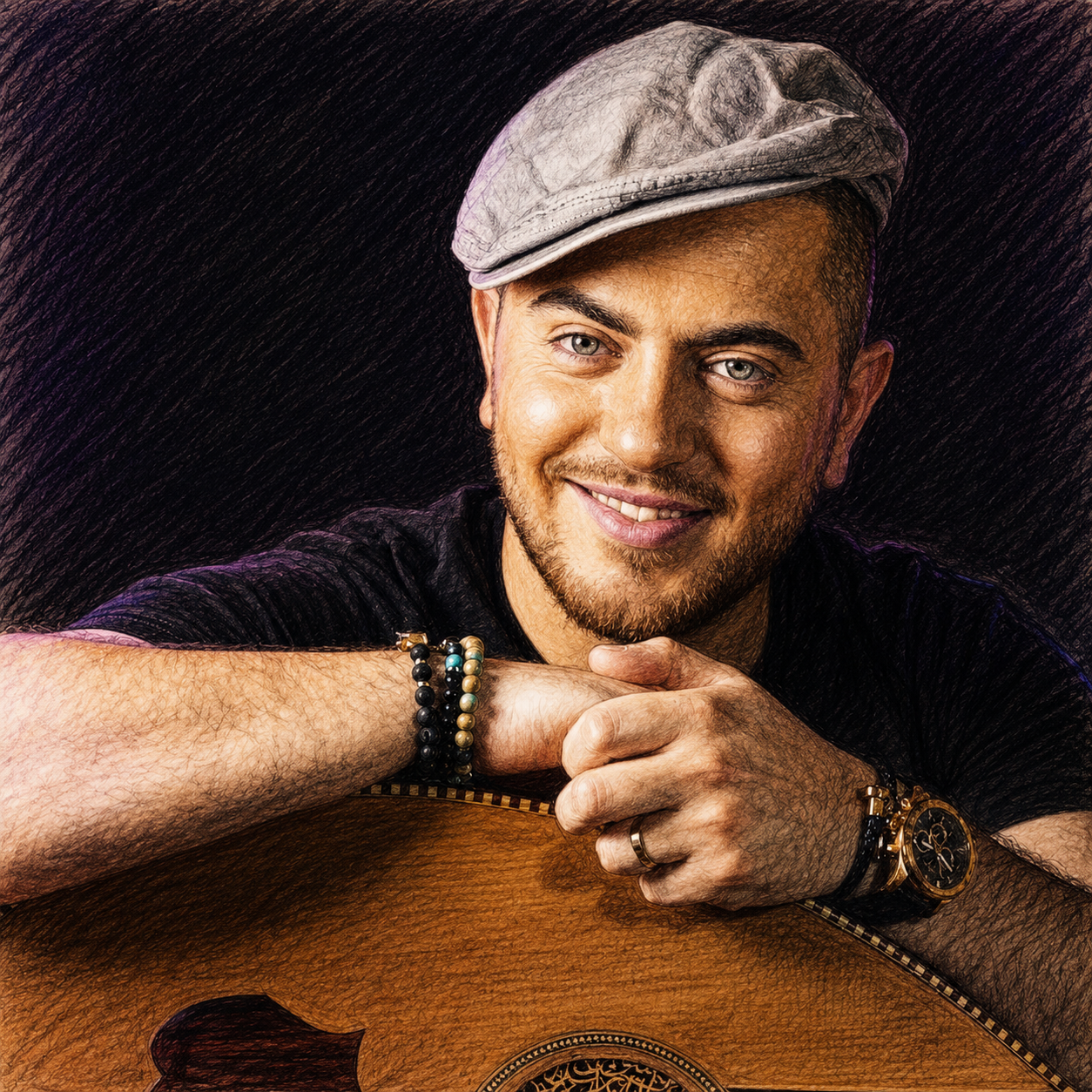
My teacher and mentor throughout my academic journey in my bachelor's and master's studies, and a companion whose influence shaped my musical path. He is an oud player with a distinctive musical way of thinking, combining the depth of Eastern music with the spirit of jazz, and opening a different space on the oud for expression and reflection. Through him, I learned that the oud is not only a traditional instrument, but a space for thought: maqam, harmony, jazz spirit, and a conscious decision in every phrase. He gave me a model of a player who thinks deeply and teaches through sound as much as through words.
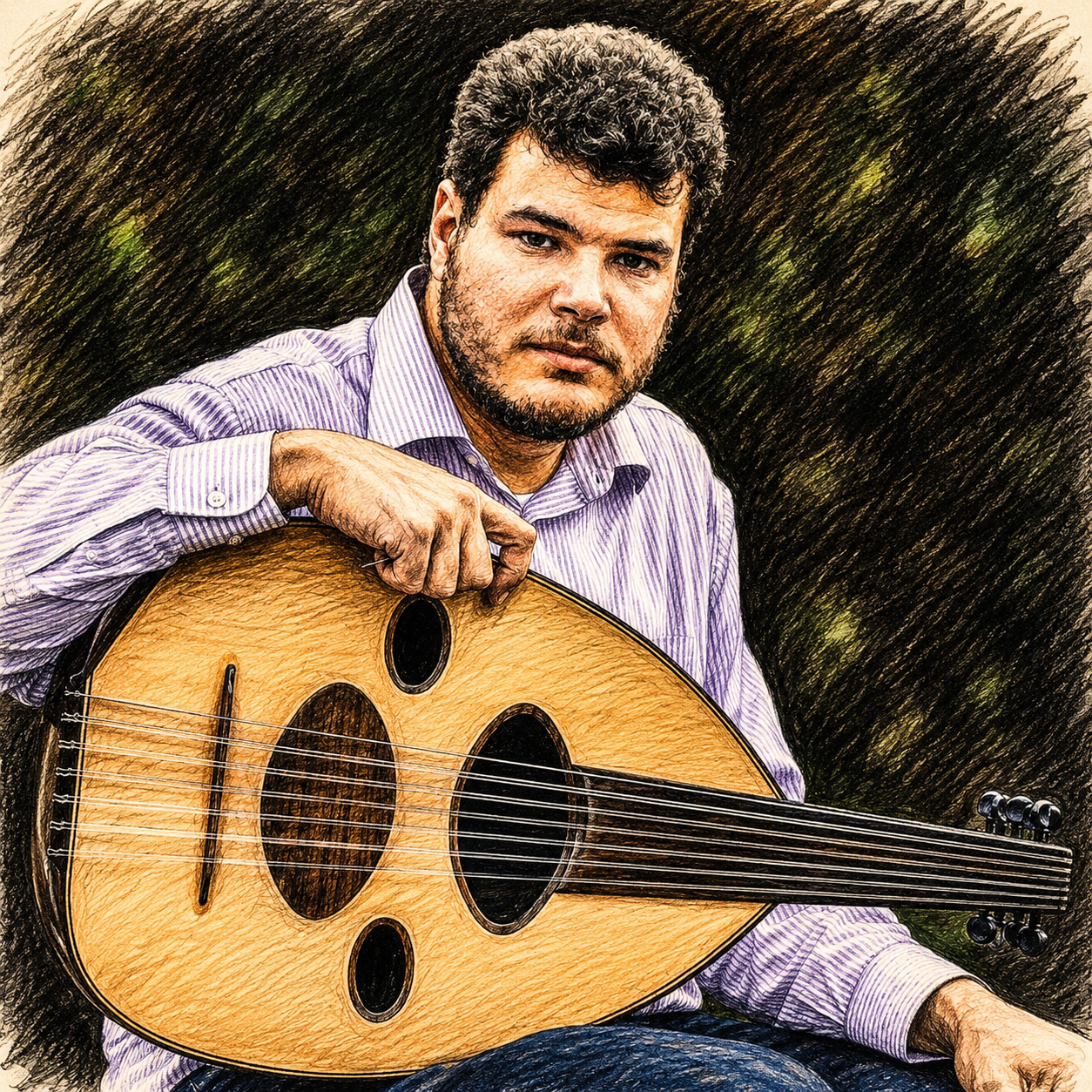
Hazem Shaheen gave me a model of a player who knows how to make the oud an instrument of dialogue, not only an instrument of display. In his playing, I hear a clear Egyptian spirit, technical rigor that does not overpower the meaning, and a musical phrase built with patience: a simple idea, maqam coloring, measured improvisation, and then a rise that knows when to stop. From him, I learned that the oud can be contemporary without losing its roots, and that speed and ornamentation have no value if they do not serve the clarity of the phrase and the honesty of expression.

Mohamed El Qasabgi opened for me the door of imagination in the oud as an instrument of thought, not only an instrument of tarab. In his legacy, I hear musical boldness, agility in the phrase, and intelligent maqam transitions that surprise the listener without cutting their connection to the Eastern root. From him, I learned that true renewal does not mean moving away from tradition, but listening to it deeply and then pushing it toward a new horizon, where the oud becomes capable of wonder and questioning, not only repetition.

Riad Al-Sunbati taught me that the oud can speak with the mind of a composer and the soul of a singer. In his playing, I do not hear technical display, but maqam dignity and a long phrase that knows how to move patiently inside the maqam. From him, I learned that tarab does not need excessive ornamentation, and that the strength of playing can lie in a measured pause, a carefully chosen note, and a quiet rise that brings the oud close to poetry and classical song.
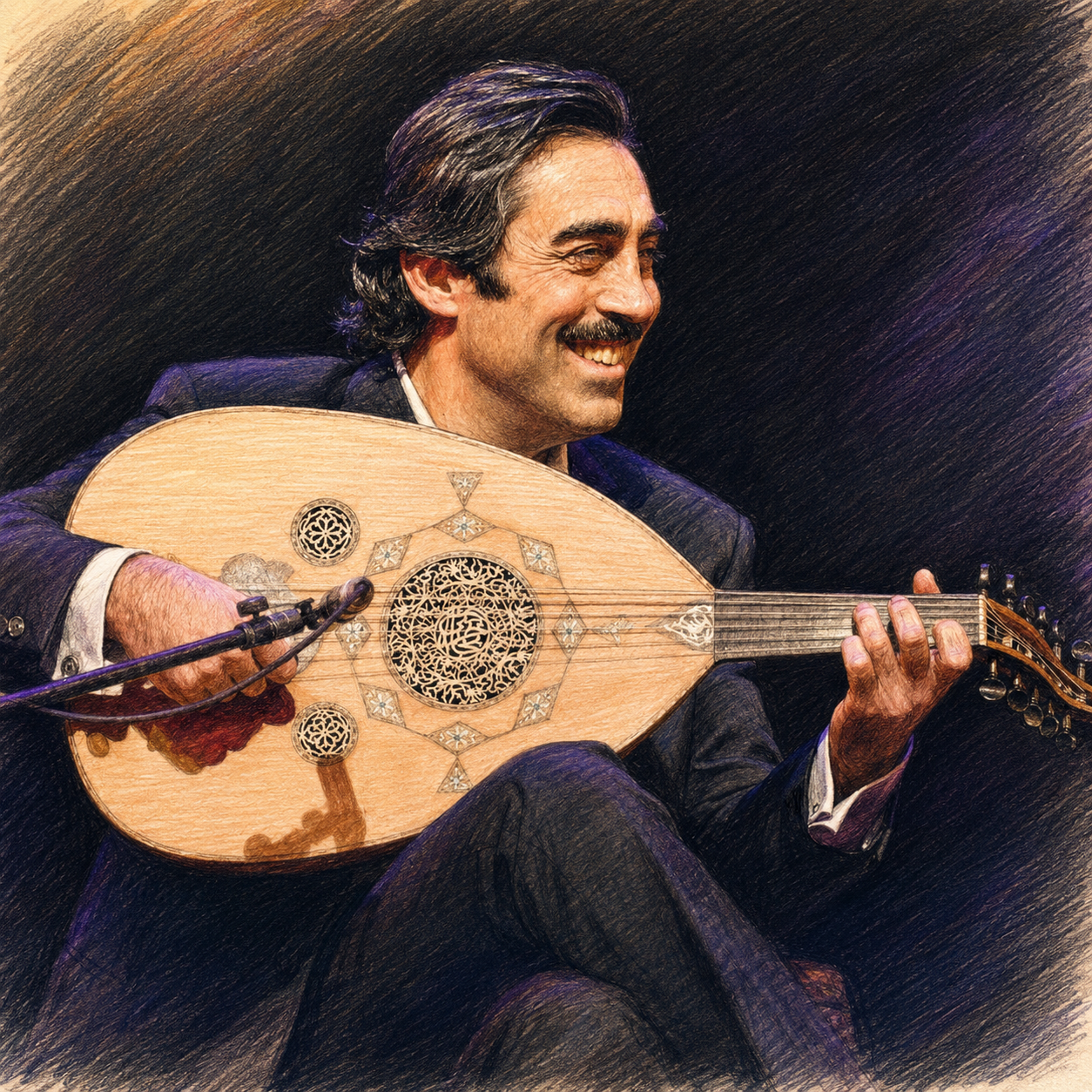
Simon Shaheen gave me an image of the oud as an Arabic instrument capable of standing confidently in a global space. In his playing, there is high precision, clean technique, and awareness of form, yet without losing the oud's Eastern tone and maqam spirit. From him, I learned that professionalism is not only speed, but disciplined sound, clear construction, and the ability to carry the maqam to a wider audience, where the Arabic takht meets the space of the global concert hall without dissolving into it.