Person profile
Sayyid Darwish
سيد درويش
Sayyid Darwish was an Egyptian composer and singer from Alexandria, widely regarded as one of the founders of modern Egyptian music. In a short life that ended in his early thirties, he moved Egyptian song away from older heavy classical forms toward a musical language rooted in the street, theater, workers, nationalism, and everyday life. Combining Arab maqam, popular expression, musical theater, and social commentary, he became a central figure in the birth of modern Egyptian song.
- 1892–1923Years/date
- EgyptPlace
- PersonType
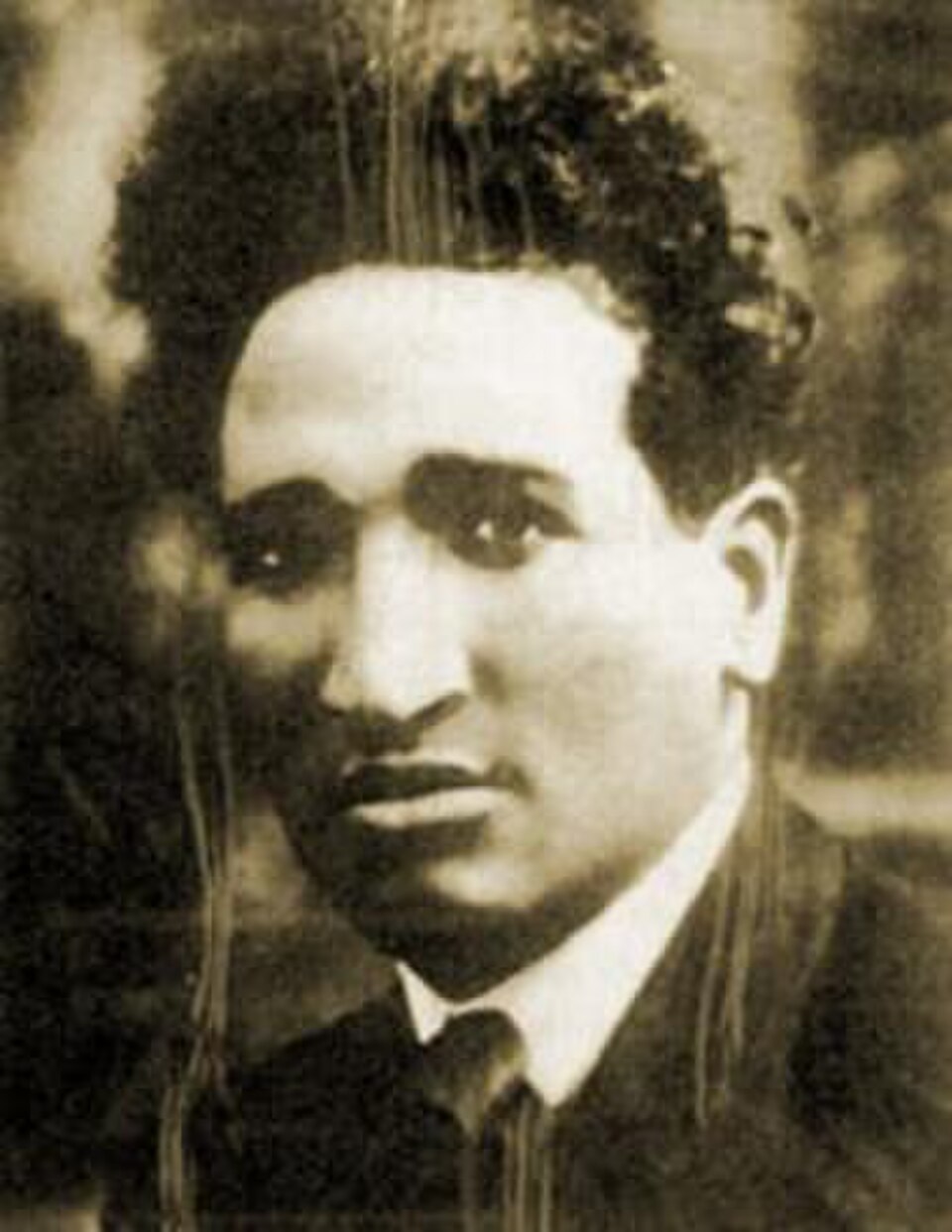
Role and context
Egyptian composer and singer from Alexandria; one of the major founders of modern Egyptian music and national-social musical theater.
Sayyid Darwish represents the birth of Egyptian musical modernity: the street, theater, nationalism, popular classes, and the modernization of Arabic forms in the early twentieth century.
This profile is linked to The Arab Musical Nahda and the Beginning of the Modern Era within the Arabic music history timeline.
Biography and life
Sayyid Darwish, born in Alexandria in 1892 and deceased in 1923, represents one of the most important transformations in the history of modern Egyptian and Arabic music. His importance lies not only in famous patriotic melodies such as Biladi Biladi, but in moving song from aristocratic and salon tarab into the spaces of the street, theater, workers, popular classes, and national consciousness. He brought everyday life into music: craftsmen, workers, ordinary people, their language, concerns, and tone. For that reason, his music was social expression rather than musical luxury alone. After moving to Cairo in 1917, he became connected to musical theater and figures such as Salama Hegazi, Naguib El Rihani, Badie Khairy, Ali al-Kassar, and Munira al-Mahdiyya. Theater became for him a space for renewing melody, drama, comedy, and social song. He also made patriotic song part of public consciousness in the context of the 1919 Revolution and British occupation, through works such as Qum Ya Masri, Aho Da Elly Sar, and Biladi Biladi, which later became the Egyptian national anthem. Darwish modernized musical forms such as the dawr, muwashshah, taqtuqa, and operetta, but treated them with a new spirit: clearer phrases, quicker drama, theatrical character, and expression closer to the public. For that reason, it is difficult to understand Mohammed Abdel Wahab, Zakariyya Ahmad, Egyptian musical theater, or Egyptian patriotic song without passing through Sayyid Darwish. On Musicatea, Sayyid Darwish appears as a founder of Egyptian musical modernity: music that is modern, Egyptian, popular, and connected to social reality at the same time.
Contributions
- Brought everyday life into music, singing for workers, craftsmen, popular classes, and ordinary people as part of Egyptian song material.
- Developed Egyptian musical theater after moving to Cairo, connecting with figures such as Salama Hegazi, Naguib El Rihani, Badie Khairy, and Ali al-Kassar.
- Made national and social song part of public consciousness, especially in the context of the 1919 Revolution and British occupation.
- Modernized forms such as the dawr, muwashshah, taqtuqa, and operetta with theatrical energy, clearer phrases, and expression closer to the public.
- Opened the path for later generations such as Mohammed Abdel Wahab and Zakariyya Ahmad, influencing the idea of modern Egyptian song itself.
- Moved music from tarab alone into social, national, and popular expression.
Works or related materials
- Biladi Biladi — Composer
His most famous patriotic work, later becoming the Egyptian national anthem; its text and spirit are connected to Mustafa Kamil's national discourse.
- Qum Ya Masri — Composer and performer
One of the most important Egyptian patriotic songs, linked to the spirit of the 1919 Revolution and national consciousness.
- Aho Da Elly Sar — Composer
A major social and patriotic work that remained alive in Egyptian and Arab memory and was later re-performed in political and cultural contexts.
- Salma Ya Salama — Composer
One of his best-known and most widely circulated melodies, with continued Arab and global presence through re-performance.
- El Helwa Di Qamet Te'gen Fel Fagriya — Composer
A strong example of bringing daily work and popular classes into song.
- Zuruni Kol Sana Marra — Composer and performer
A romantic work that remained in Arab memory and was frequently re-performed.
- Ana Hawet Wentaheit — Composer
An important tarab work connecting Darwish to romantic song forms.
- El Ashara El Tayba — Operetta / musical theater
An important musical theater work showing that Darwish was not only a composer of single songs.
- Shahrazad — Operetta / theater work
Shows his ambition to develop Egyptian musical theater.
- El Barouka — Theater work
One of his theatrical works, showing the breadth of his output beyond individual songs.
Related people
Sources listed in the data
- Encyclopaedia Britannica — Sayyid Darwish
Encyclopaedia Britannica
Source - Al Jadid — Sayyed Darwish, Major Arab Music Pioneer
Al Jadid
Source - Al Jadid — Sayyed Darwish: The Father of Modern Arab Music
Al Jadid
Source - Afropop Worldwide — Moody Emam on the Legacy of Sayed Darwish
Afropop Worldwide
Source - IMDb — Sayed Darwish
IMDb
Source