Person profile
Ahmed Fouad Negm
أحمد فؤاد نجم
Ahmed Fouad Negm, known as al-Fagoumi, was an Egyptian vernacular poet and one of the most influential political and social poetic voices in the Arab world. His long collaboration with Sheikh Imam Issa transformed his poems into sharp, satirical protest songs that spoke for the poor, workers, students, and the marginalized. His musical importance lies not in composition or performance, but in making Egyptian colloquial poetry central to modern Arab political song.
- 1929–2013Years/date
- EgyptPlace
- PersonType
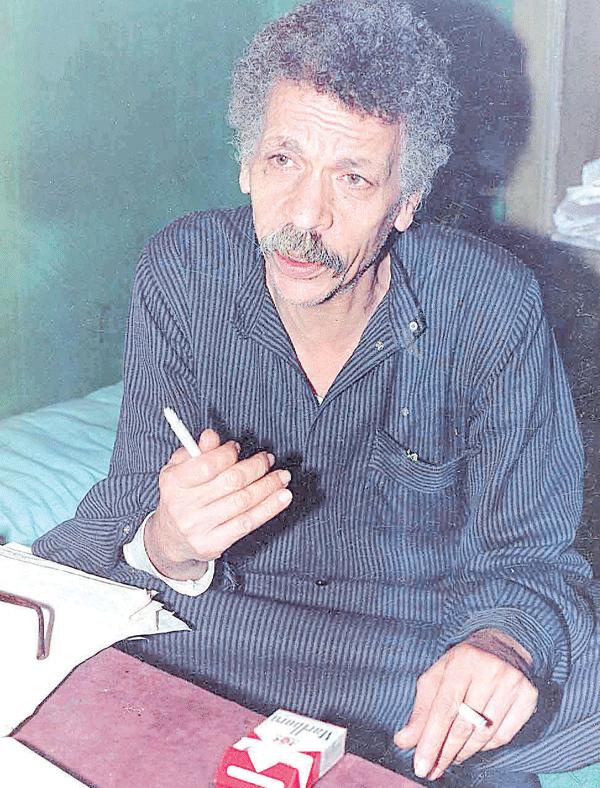
Role and context
Egyptian vernacular poet; al-Fagoumi and the poetic voice of popular political song with Sheikh Imam.
Ahmed Fouad Negm belongs to the era of political song and protest culture in the second half of the twentieth century, when Egyptian vernacular became a tool of singing, opposition, and popular satire.
This profile is linked to The Shift toward Modern Arabic Song within the Arabic music history timeline.
Biography and life
Ahmed Fouad Negm appears on Musicatea not only as an Egyptian poet, but as a central figure in the history of Arabic political song. Born in 1929 in Sharqia, Egypt, he lived through a difficult childhood, early labor, and imprisonment that shaped both his language and public character. He wrote from inside poverty and marginalization, not as an outside observer, and his Egyptian colloquial language became close to ordinary people: satirical, direct, biting, and easy to sing and memorize. His musical importance came from his long collaboration with Sheikh Imam Issa; there, the poem became a protest song, moving from paper to cafés, universities, prisons, and demonstrations. Negm represents an important shift from official patriotic song coming from above to popular political song coming from below: from the street, workers, students, and the marginalized. He used satire to break the aura of authority and wrote texts that could be reused in different political moments, from the 1970s to the 2011 revolution. Prison was central to his formation; there he met novelist Abdel Hakim Qasem, discovered himself as a poet, and won recognition for his early collection Pictures from Life and Prison, associated with Suhair al-Qalamawi's introduction. But he did not remain only a book poet; with Sheikh Imam he became the maker of a full sung protest repertoire: Guevara Mat, Masr Yamma Ya Baheya, Sharraft Ya Nixon Baba, Humma Min We Ehna Min, El Ful Wel Lahma, and others. He should therefore be understood as a writer of sung protest: a poet who made Egyptian vernacular language simultaneously musical and political.
This profile only uses available Musicatea data: name, alternate name when present, role, linked era, and library sheets when a documented connection exists.
Contributions
- Turned Egyptian colloquial Arabic into a satirical, direct language of artistic protest that could be sung, memorized, and collectively repeated.
- Founded with Sheikh Imam a model of popular political song in contrast to official institutional patriotic song.
- Placed the poor, workers, students, and marginalized people at the center of poetry and song.
- Used satire and popular invective to break the aura of authority, writing texts that continued to circulate across different protest moments.
- Connected poetry to the café, university, prison, and demonstration, not only to the printed book or cultural institution.
- Produced with Sheikh Imam a cross-generational protest repertoire that returned strongly in moments such as the 1970s movements and the 2011 revolution.
- Made vernacular language central to the history of modern Arab political song, even though he was not a singer or composer in the direct sense.
Works or related materials
- Guevara Mat — Poet; sung by Sheikh Imam
One of the most famous Negm/Imam works, connecting Arabic political song to the global revolutionary figure Che Guevara.
- Masr Yamma Ya Baheya — Poet; sung by Sheikh Imam
One of Negm's best-known images of Egypt as a popular mother, not an official symbol.
- Sharraft Ya Nixon Baba — Poet; sung by Sheikh Imam
A model of sharp political satire and Negm's direct language against authority and domination.
- Humma Min We Ehna Min — Poet; sung by Sheikh Imam
A central work in his class and political division between power and the people.
- El Bahr Beyedhak Leh — Poet; sung by Sheikh Imam
A work with a less direct poetic tone that still carries social and political feeling.
- El Ful Wel Lahma — Poet; sung by Sheikh Imam
A strong example of criticizing poverty and inequality in simple, sharp everyday language.
- Ana Atoub ‘An Hobbek Ana? — Poet; sung by Sheikh Imam
Shows that Negm did not write only political slogans, but song texts open to emotional and political interpretation.
- Shayyed Qusurak — Poet; sung by Sheikh Imam
A direct class critique of power and wealth, and one of his most remembered protest texts.
- Raga‘u El-Talamza — Poet; sung by Sheikh Imam
One of the works associated with student protest and the university as a political space.
- Etgama‘u El-‘Ushaq fi Sijn El-Qal‘a — Poet; sung by Sheikh Imam
One of his most famous prison and resistance texts with Sheikh Imam.
- Pictures from Life and Prison — Early poetry collection
Important for understanding his poetic formation and prison experience, not as a song but as a literary source of his voice.
- El-Fagoumi — Autobiography
A key text for understanding his voice, biography, and public persona.
Related sheets
No sheets are linked to this profile in the current library data.
Related people
Sources listed in the data
- Prince Claus Fund — Ahmed Fouad Negm
Prince Claus Fund
- Jadaliyya — Ahmed Fouad Negm: A Profile from the Archives
Jadaliyya
- Jadaliyya — Sheikh Imam Remembers Negm
Jadaliyya
- Arab America — The Story of Sheikh Imam and Poet Ahmed Fouad Negm
Arab America
- Afikra / Daftar — Sheikh Imam & Ahmed Fouad Negm
Afikra / Daftar
- Musicatea internal comparative profile notes