Person profile
Sheikh Imam Eissa
الشيخ إمام عيسى
Sheikh Imam Eissa was one of the most important figures of twentieth-century Arabic political song. He combined religious and popular musical formation with Ahmed Fouad Negm’s colloquial poetry, creating songs that spoke for the poor, workers, students, and dissidents outside official radio and state cultural institutions.
- 1918–1995Years/date
- EgyptPlace
- PersonType
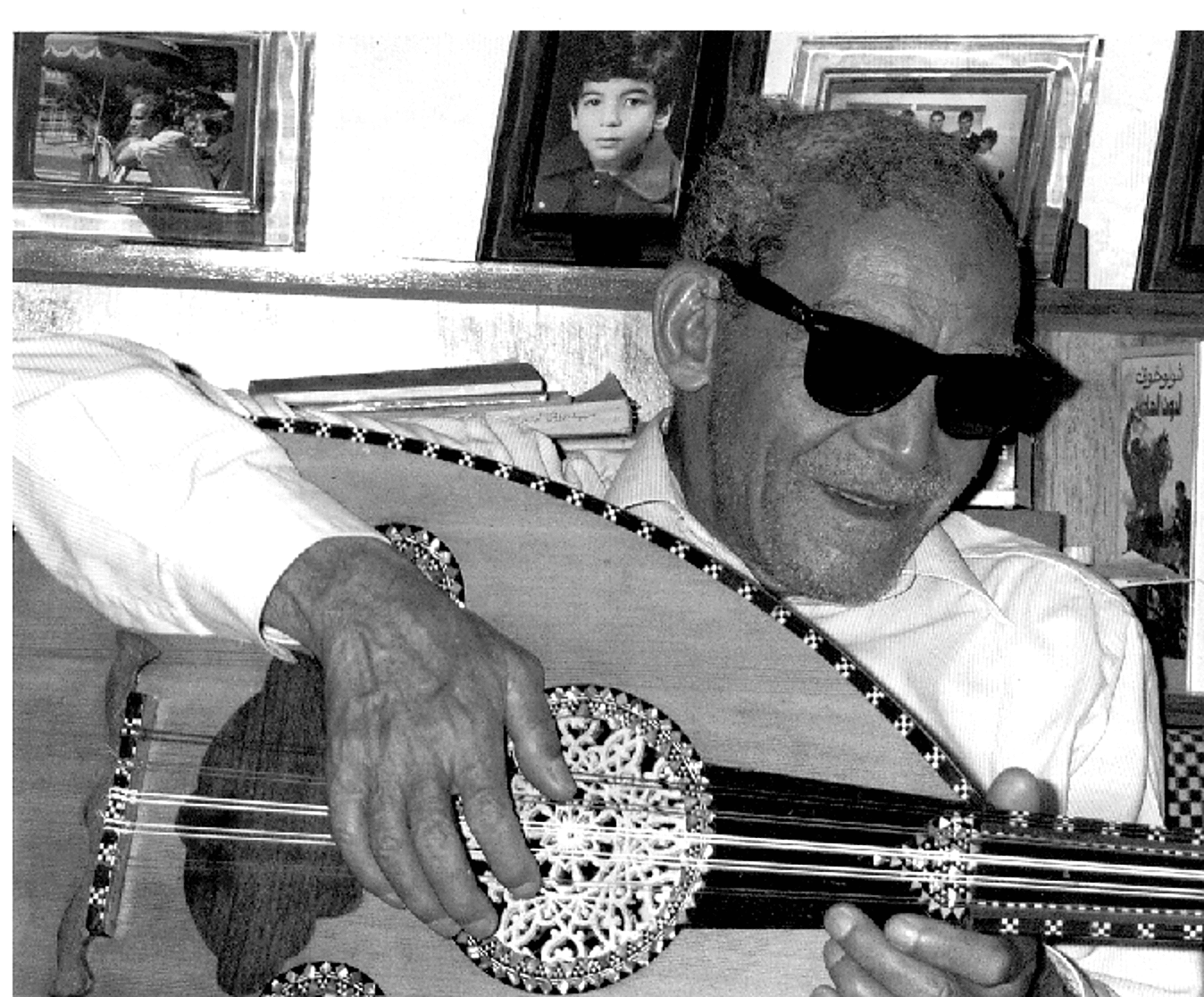
Role and context
Egyptian singer, composer, and oud player, one of the major figures of Arabic political and protest song, closely associated with poet Ahmed Fouad Negm.
Sheikh Imam represents a key modern-pop-transition figure in the rise of political popular song in Egypt and the Arab world.
This profile is linked to The Shift toward Modern Arabic Song within the Arabic music history timeline.
Biography and life
Sheikh Imam Eissa was born in Abu al-Numrus, Giza Governorate, in 1918, into a poor family. He lost his eyesight in childhood and turned early toward religious education, memorizing the Qur’an. He later moved to Cairo and studied for a period at al-Azhar, but his real artistic formation took shape in popular urban neighborhoods, between recitation, religious chanting, and music. In Cairo, he met Sheikh Darwish al-Hariri, an important teacher of music, maqam, and muwashshah, who introduced him to musical foundations. He later worked with Zakariyya Ahmad, linking him directly to the Egyptian “artist-sheikh” lineage: performers who moved from Qur’anic recitation and religious singing into composition and modern song. He was also influenced by Sayed Darwish, Abdou al-Hamouli, and Egyptian folk song. The decisive turning point came in 1962, when he met the colloquial poet Ahmed Fouad Negm. Negm wrote in Egyptian Arabic about poverty, oppression, irony, and power, while Sheikh Imam had the voice, oud, and melodic instinct to turn these words into direct and sharp songs. Their meeting created one of the most important duos in the history of Arabic political song. After the 1967 defeat, the songs of Imam and Negm gained new meaning. At a time when official music often leaned toward patriotic mobilization or justification, their songs offered satirical and direct criticism of authority, defeat, and corruption. They were banned from official radio and television and were imprisoned or detained more than once, but their songs spread through universities, cafés, homes, demonstrations, and cassette culture. Among Sheikh Imam’s best-known songs are “Misr Yamma Ya Bahiyya,” “Guevara Mat,” “Yeʿish Ahl Baladi,” “Sharraft Ya Nixon Baba,” “ʿAn Mawduʿ el-Ful wel-Lahma,” “El-Fallahin,” and “Baqarat Haha.” These songs belong not only to tarab or art song, but to street song, protest, and political satire. In the 1980s, Sheikh Imam began performing outside Egypt, including concerts in France, Britain, Lebanon, Tunisia, Libya, and Algeria. Over time he became a transnational symbol: his voice was no longer only Egyptian, but part of the memory of Arab leftists, students, unions, and dissident intellectuals. He later separated from Ahmed Fouad Negm after disagreements, but the two remain inseparable in cultural memory. Sheikh Imam died in 1995.
This profile only uses available Musicatea data: name, alternate name when present, role, linked era, and library sheets when a documented connection exists.
Contributions
- One of the pillars of Arabic political and protest song.
- Turned Ahmed Fouad Negm’s colloquial poetry into sharp, popular, satirical song.
- Reused the formation of the religious singer-sheikh in a political popular context.
- Became a voice for the poor, workers, students, and dissident intellectuals.
- Used oud and direct vocal delivery instead of large orchestration, creating an alternative to official song.
- His songs spread through universities, cafés, cassette culture, and demonstrations despite official bans.
- Influenced later Arab protest-song traditions, including the memory of the 2011 uprisings.
Works or related materials
- Misr Yamma Ya Bahiyya — political/popular patriotic song.
One of his best-known songs with Ahmed Fouad Negm, expressing love for Egypt from a critical popular position.
- Guevara Mat — internationalist political song.
Connects Egyptian popular feeling with the image of Che Guevara as a global revolutionary.
- Yeʿish Ahl Baladi — social/political song.
Celebrates ordinary people and popular classes.
- Sharraft Ya Nixon Baba — satirical political song.
A clear example of satire directed at power and international politics.
- ʿAn Mawduʿ el-Ful wel-Lahma — social satire.
Addresses poverty, food, and social justice in everyday language.
- El-Fallahin — social song.
Places peasants and popular classes at the center of song discourse.
- Baqarat Haha — symbolic/satirical song.
Became part of the memory of popular protest.
Related sheets
No sheets are linked to this profile in the current library data.