Person profile
Sabah Fakhri
صباح فخري
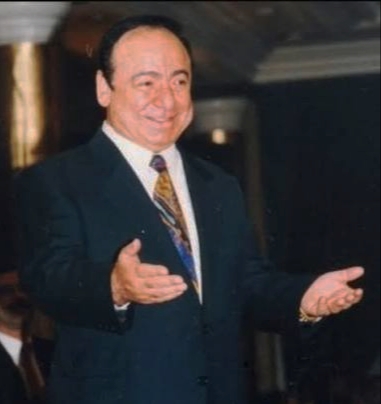
Sabah Fakhri, born Sabah al-Din Abu Qaws, was a Syrian singer from Aleppo and one of the greatest Arab tarab voices of the twentieth century. He became closely associated with preserving and popularizing Aleppine qudud, muwashshahat, qasa’id, and classical vocal forms, distinguished by a powerful voice, long breath, precise maqam knowledge, and a rare ability to lead extended tarab performances for live audiences. More than a performer of tradition, he became one of the key figures who made Aleppine singing known and loved across the Arab world and beyond.
- 1933–2021Years/date
- SyriaPlace
- PersonType
Role and context
Syrian singer from Aleppo; one of the greatest Arab tarab voices and a modern guardian of qudud, muwashshahat, and the Aleppine wasla.
Sabah Fakhri belongs to the modern period that re-presented classical Aleppine singing to a broad Arab and global public while preserving the depth of the Aleppo school, qudud, muwashshahat, and wasla.
This profile is linked to The Shift toward Modern Arabic Song within the Arabic music history timeline.
Biography and life
Sabah Fakhri is not merely a singer of Aleppine qudud; he is one of the most important figures who preserved and popularized Aleppine qudud, muwashshahat, wasla, qasida, and classical Aleppine vocal forms in the modern era. Born in Aleppo in 1933 as Sabah al-Din Abu Qaws, he received his musical formation in an Aleppine environment rich in religious singing, muwashshahat, and traditional song, and studied in music institutes in Aleppo and Damascus. His stage name is associated with Fakhri al-Barudi, who encouraged him and gave him the name Sabah Fakhri. His importance is not based on beauty of voice alone, but on turning Aleppine heritage into an Arab and global public repertoire: long live performance, enormous musical memory, maqam knowledge, exceptional breath, and a stage presence capable of igniting an audience. In his performance, qudud and muwashshahat do not appear as museum material but as living music built inside the wasla: maqam, gradual movement, escalation, interaction, and the evocation of deep tarab memory. UNESCO’s file on al-Qudoud al-Halabiya refers to Sabah Fakhri as the iconic singer from Aleppo who promoted this tradition around the world, a central point for understanding his status. It is therefore not enough to read Sabah Fakhri as a heritage singer; he is an essential link between old Aleppo and the modern Arab public, and between oral traditions and the global stage. On Musicatea, Sabah Fakhri represents the Aleppine performance school: qad, muwashshah, wasla, maqam, qasida, dawr, and long live tarab.
This profile only uses available Musicatea data: name, alternate name when present, role, linked era, and library sheets when a documented connection exists.
Contributions
- Popularized Aleppine qudud worldwide, with UNESCO describing him as the iconic singer from Aleppo who promoted the tradition around the world.
- Preserved and re-presented muwashshahat, qudud, qasa’id, and classical vocal forms through wide-reaching live performance.
- Turned Aleppine heritage from educational or archival material into a living tarab concert experience that could be repeated and passed between generations.
- Represented the school of long-form performance, where the wasla becomes a path of maqam, escalation, and audience interaction rather than a set of adjacent songs.
- Was distinguished by a powerful voice, long breath, precise maqam knowledge, and exceptional stage presence.
- Served as an essential link between old Aleppo and the modern Arab public, and between oral traditions and the global stage.
- Made concepts such as maqam, wasla, tarab, qad, and muwashshah part of modern Arab listening memory.
Works or related materials
- Ya Mal El Sham — Performer
One of the qudud most closely associated with Sabah Fakhri, becoming a symbol of Levantine and Aleppine song.
- Qaddak El Mayyas — Performer
A core work in the Aleppine qudud repertoire and one of the most widely circulated works in the Arab world.
- Khamrat El Hob — Performer
One of the works most associated with Sabah Fakhri, representing Aleppine tarab in a public, mass form.
- Eb‘atli Gawab — Performer
An important popular/tarab work in his repertoire, showing the flexibility of his performance between heritage and popular taste.
- Ya Tayra Tiri — Performer
A work that highlights the repeatable popular character inside broader tarab performance.
- Foug El Nakhal — Performer
Although Iraqi in origin, Sabah Fakhri performed it and brought it into the memory of his live repertoire; it is listed as related, not as an original Aleppine qad.
- Malek Ya Helwa Malek — Performer
One of the qudud circulated in his repertoire, showing the lighter and more popular side of Aleppine singing.
- Ya Hadi El ‘Eis — Performer
A work from his repertoire connecting him to qasida and tarab-inflected chanting.
- Muwashshah Imlali al-Aqdah — Muwashshah / performer
Represents the muwashshah side of his repertoire, because Sabah Fakhri was not only a performer of qudud.
- Ya Shadi al-Alhan — Muwashshah / performer
A useful entry for representing muwashshahat and maqam memory in his performance.
- Ya Helwa Sha‘rek Dari — Performer
A popular Levantine/Aleppine work representing the popular tarab side of his performance.
- Aleppine Wasla — Performance form / living legacy
The real frame that gathers qudud, muwashshahat, taqasim, qasa’id, and adwar in the Aleppo school.
Related sheets
Maqam and rhythm links from related sheets: Bayat
Related people
Sources listed in the data
- UNESCO Intangible Cultural Heritage — Al-Qudoud al-Halabiya
UNESCO
- UNESCO nomination file — Al-Qudoud al-Halabiya
UNESCO
- SANA — Aleppine Qudud and Muwashahat
SANA
- Sabah Fakhri encyclopedia / general reference pages
- Last.fm and music database pages
- Musicatea internal comparative profile notes