Person profile
Abdel Halim Hafez
عبد الحليم حافظ
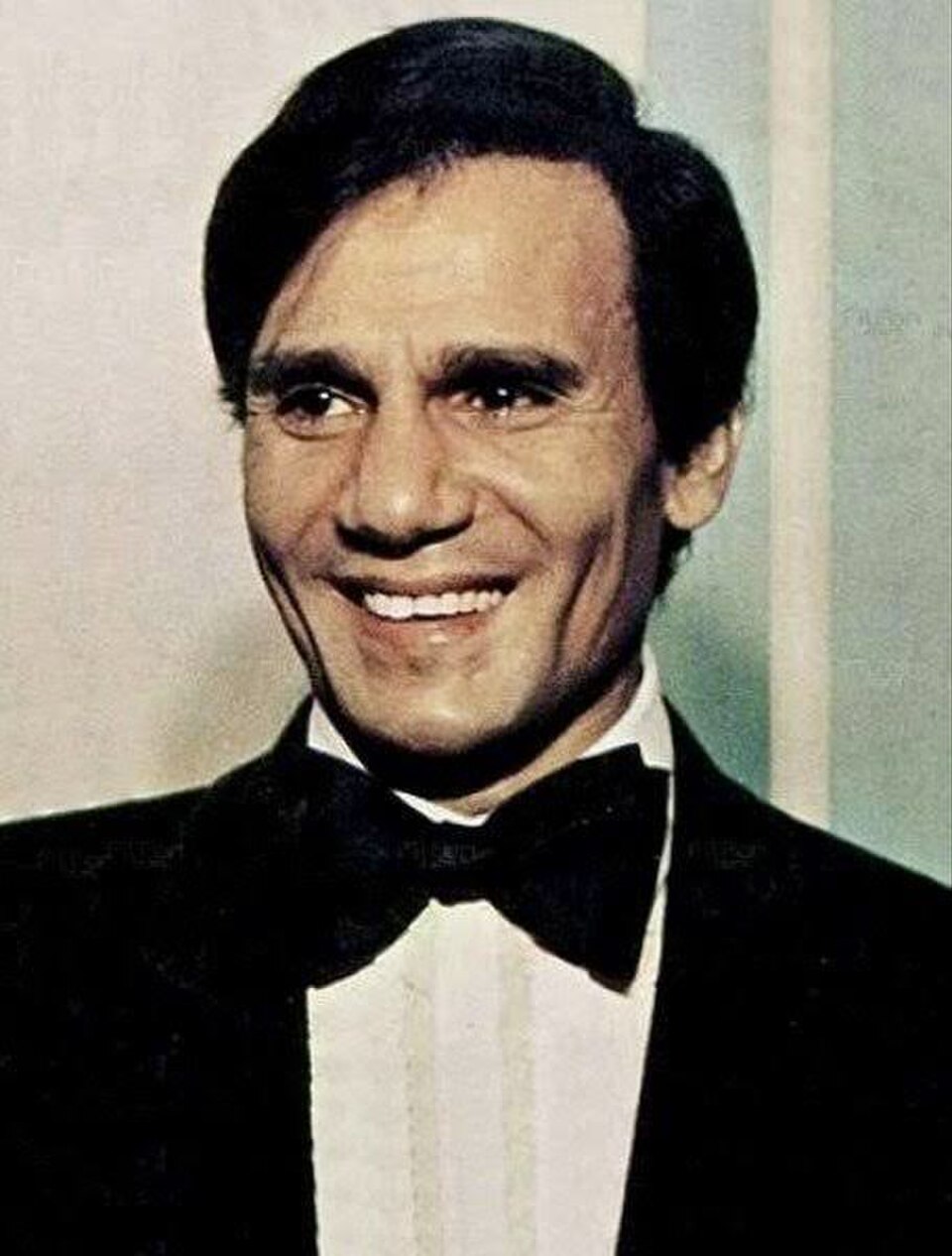
Abdel Halim Hafez, known as al-Andalib al-Asmar or the Dark-Skinned Nightingale, was an Egyptian singer and actor, and one of the defining Arab voices of the twentieth century. He represented a new generation of Arabic song built on intimacy, direct emotional expression, cinematic performance, and the modern long-form song. His work ranged from romance to patriotic song, and he collaborated with major composers and poets including Mohammed Abdel Wahab, Kamal al-Taweel, Mohamed al-Mougi, Baleegh Hamdi, Salah Jahin, Abdel Rahman al-Abnudi, and Mohamed Hamza.
- 1929–1977Years/date
- EgyptPlace
- PersonType
Role and context
Egyptian singer, actor, and producer; the Dark-Skinned Nightingale and a defining voice of intimacy, cinema, and national song in modern Arabic music.
Abdel Halim Hafez represents the movement of Egyptian song toward intimacy, youth, cinema, and modern national song while preserving the long-song form in the 1960s and 1970s.
This profile is linked to The Golden Age of Arabic Music within the Arabic music history timeline.
Biography and life
Abdel Halim Hafez, born Abdel Halim Ali Ismail Shabana, was born on 21 June 1929 in the village of El-Halawat in Sharqia, Egypt, and died in London on 30 March 1977. He should not be presented only as a romantic singer; he is a central figure in the movement of Egyptian song from the grand classical tarab voice toward intimacy, youth, cinema, Nasser-era nationalism, and modern emotional drama. He studied at the Institute of Arabic Music, graduated as an oboe player, and worked as a music teacher before joining the radio orchestra. The broadcaster Hafez Abdel Wahab discovered him, and from him Abdel Halim took the name Hafez. His fame began with Safini Marra, composed by Mohamed El Mougy. His voice was not built on power alone, but on fragility, sincerity, tension, clarity of the word, and dramatic tone. In cinema, he created a new image of the young singer close to ordinary people; he was not merely a radio voice, but a dramatic figure who lived love, waiting, illness, and social ascent before the audience. In patriotic song, his voice became part of the Egyptian project after the July Revolution and of the discourse of Abdel Nasser and Arab nationalism, from Ihna El Shaab and Nasser Ya Horeya to Soura, Adda El Nahar, and El Watan El Akbar. His partnerships with composers created different phases of his sound: Kamal al-Taweel gave him an early romantic and patriotic side, Mohamed al-Mougi gave his voice maqam tension and drama, Baleegh Hamdi shaped the charged long song with works such as Sawah, Zay El Hawa, and Maw‘oud, and Mohammed Abdel Wahab gave him elegant orchestral writing in songs such as Ahwak and Fatet Ganbena. His illness and short life became part of his legend, but the main musical point is that this fragility became a performance language: a voice close to the individual listener, whispering, rising, tightening, and turning personal experience into collective memory.
This profile only uses available Musicatea data: name, alternate name when present, role, linked era, and library sheets when a documented connection exists.
Contributions
- Introduced a new model of the Arab singer: less vocally demonstrative than the Kulthum model and closer to the individual listener through intimacy and dramatic sincerity.
- Made the modern romantic song a space of confession, tension, and fragility, not only vocal ornamentation.
- Built with cinema the image of the modern singer, where the song became part of a youthful and social dramatic narrative.
- His voice became part of the Egyptian national project after the July Revolution, through works connected to Abdel Nasser, Arab nationalism, and the post-1967 moment.
- Gathered around him a major artistic circle of composers and poets, from Mohamed El Mougy, Kamal al-Taweel, Baleegh Hamdi, and Mohammed Abdel Wahab to Salah Jahin, El-Abnudi, and Nizar Qabbani.
- Helped move Arabic song into a modern form connected to the microphone, radio, cinema, orchestral arrangement, and modern instruments.
- Turned the concert into a gradual dramatic space, with anticipation, preparation, and emotional accumulation, not simply a sequence of performed songs.
Works or related materials
- Safini Marra — Performer; composed by Mohamed El Mougy
One of the beginnings of his fame and a moment when a new intimate color entered Egyptian romantic song.
- Ahwak — Performer; composed by Mohammed Abdel Wahab
One of his most famous songs, representing the young romantic cinematic Abdel Halim in elegant melodic writing.
- Gana El Hawa — Performer; composed by Baleegh Hamdi
A light and widely popular work showing mass appeal and flexible performance.
- Sawah — Performer; composed by Baleegh Hamdi
One of his major popular and wandering-themed works, and one of his most widely circulated Arab songs.
- Zay El Hawa — Performer; composed by Baleegh Hamdi
A model of the modern long dramatic song and the tension between personal confession and melodic drive.
- Maw‘oud — Performer; composed by Baleegh Hamdi
A long and emotionally charged work showing Abdel Halim in a phase of dramatic maturity.
- Hawel Teftekerni — Performer
A late romantic work showing his ability to turn weakness and waiting into a large musical performance.
- Ay Dam‘et Hozn La — Performer; composed by Baleegh Hamdi
A late work showing expanded song form and long dramatic breath.
- Qari’at al-Fingan — Performer; words by Nizar Qabbani, composed by Mohamed El Mougy
His last major song during his lifetime and a dramatic closing statement of his stage voice.
- Risala Min Taht El Ma — Performer; words by Nizar Qabbani, composed by Mohamed El Mougy
A sung poem revealing his ability to carry modern text with a popular voice.
- Adda El Nahar — Performer; words by Abdel Rahman al-Abnudi, composed by Kamal al-Taweel
A post-1967 patriotic/elegiac work, essential for understanding his relation to political history.
- Ihna El Shaab — Performer; composed by Kamal al-Taweel
A patriotic work tied to Abdel Nasser and the Egyptian republic after the July Revolution.
- Nasser Ya Horeya — Performer
One of his patriotic works linked to the Nasser era and the discourse of freedom and nationalism.
- Soura — Performer; words by Salah Jahin, composed by Kamal al-Taweel
One of his major mass patriotic songs.
- El Wisada El Khalia — Film / actor and singer
One of his important films in shaping the young romantic singer image.
- El Khataya — Film / actor and singer
An important cinematic work in his popular and dramatic image.
- Abi Fawq El Shagara — Film / actor and singer
One of his most famous later films, revealing the intersection of singing, drama, and mass appeal.
- Ayyam We Layali — Film / actor and singer
One of the films connected to his early cinematic image.
Related sheets
Related people
Sources listed in the data
- Encyclopaedia Britannica — Abd al-Halim Hafiz
Encyclopaedia Britannica
Source - Halim House — Abdel Halim Hafez Biography
Halim House
- IMDb — Abdel Halim Hafez Biography
IMDb
- MusicBrainz — Abdel Halim Hafez
MusicBrainz
- Musicatea internal comparative profile notes