Person profile
George Wassouf
جورج وسوف
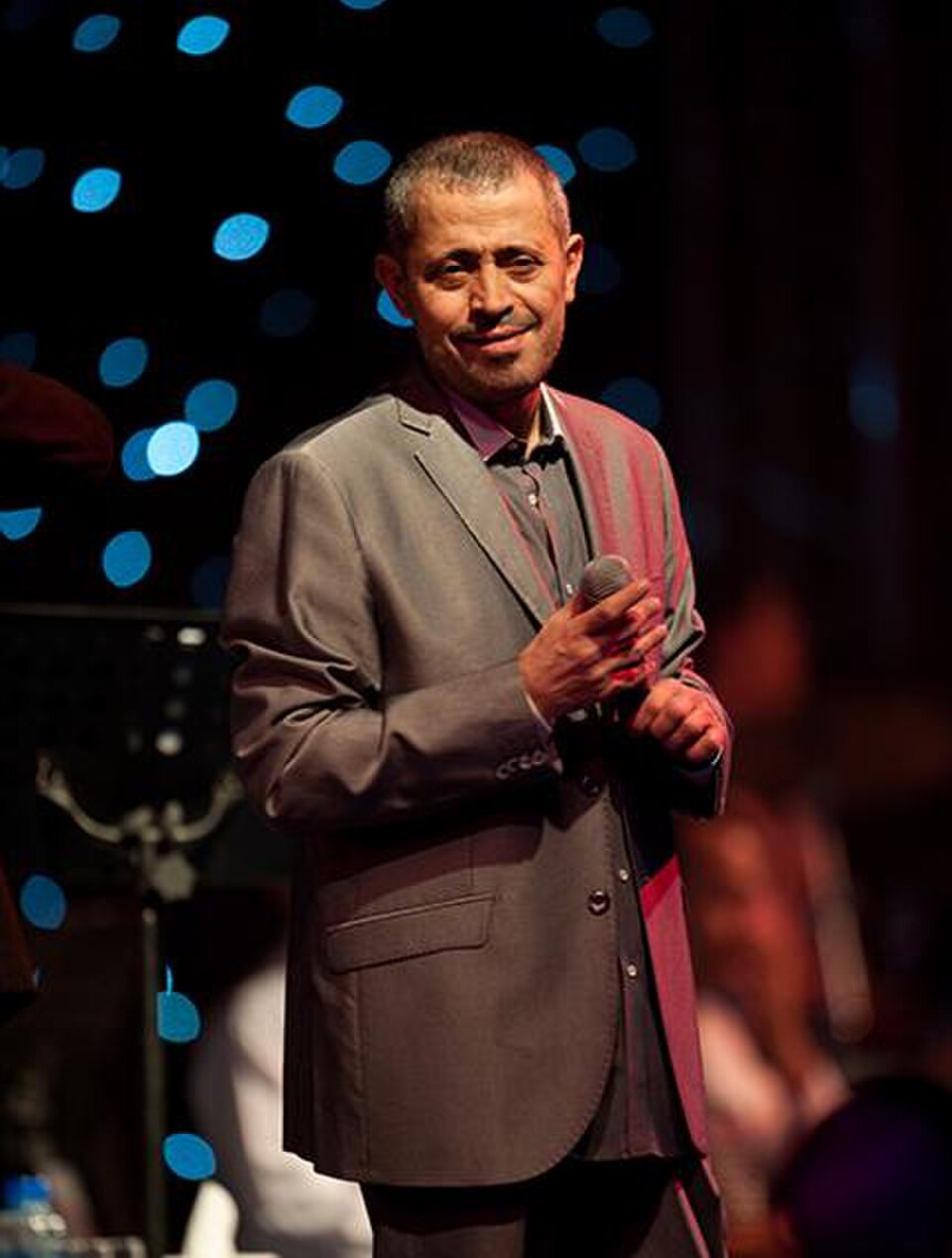
George Wassouf is a Syrian singer and one of the most prominent voices of contemporary Arabic song since the late twentieth century. Widely known as Sultan al-Tarab, he became famous for a deep, rough-edged voice, emotionally direct delivery, and live performances shaped by feeling, vocal extension, and audience interaction. Beginning his career at a young age, he moved from weddings and television appearances to broad Arab stardom, preserving the image of the popular tarab singer in the era of cassette, music video, and modern commercial production.
- 1961–Years/date
- SyriaPlace
- PersonType
Role and context
Syrian singer; Sultan al-Tarab and one of the major voices of contemporary popular tarab in the Arab world.
George Wassouf belongs to the transition from traditional mass tarab to modern Arab stardom based on the album, the concert, and cross-border circulation, while preserving the centrality of voice and live performance.
This profile is linked to The Shift toward Modern Arabic Song within the Arabic music history timeline.
Biography and life
George Wassouf represents a contemporary continuation of mass-audience tarab in the late twentieth and early twenty-first centuries. Born in Kafroun, Syria, in 1961, he began singing at a young age in his local environment before moving into a wider space in Lebanon and the Arab world. Music platforms and artist references associate his beginnings with performing classics by Umm Kulthum, Warda, and Abdel Halim Hafez at weddings and on television, then with his rise after appearing on Studio El Fan. For Musicatea, Wassouf should not appear only as a commercial singer, but as a contemporary popular tarab voice: rough-edged timbre, heavy emotional feeling, live performance, direct audience interaction, and relatively extended romantic songs that remained close to the logic of tarab despite the era of cassette, music video, Rotana, and digital platforms. His main strength is performance rather than theory or formal innovation. He is not a sung-poem composer like Riyad al-Sunbati, nor a cinema singer like Abdel Halim Hafez, but a mass-audience singer whose artistic identity is carried by stage presence and popular memory. His relationship with tarab heritage is also important; his live recordings of Umm Kulthum, Abdel Halim, and Warda show that he does not come from nowhere, but builds his image through the ownership of older tarab repertoire before producing his own songs within contemporary taste. His profile should therefore focus on voice, repertoire, concert, and public memory rather than on sensational biography or personal, health, and political events.
This profile only uses available Musicatea data: name, alternate name when present, role, linked era, and library sheets when a documented connection exists.
Contributions
- Preserved the image of the popular tarab singer in the era of cassette, music video, and modern commercial production.
- Reformulated mass-audience tarab after the classical generation through rough timbre, direct feeling, and relatively extended live performance.
- Built a clear relationship with the heritage of Umm Kulthum, Abdel Halim Hafez, and Warda through live recordings and performances of their classics.
- Reinforced the place of the heavy romantic song in the 1990s and early 2000s, at a time when the market moved toward lighter and more image-driven songs.
- Made vocal grain and personal tone an essential part of the singer’s identity, not merely a performance tool.
- Represented the movement of popular tarab into the modern Arab album and concert industry, then into digital platforms, without losing the centrality of voice.
- His career is useful for understanding how the idea of tarab remained alive inside a broad contemporary commercial music market.
Works or related materials
- El Hawa Sultan — Performer
An early and important work tied in public memory to his title Sultan al-Tarab and to his first image as a mass-audience tarab singer.
- Kalam El Nass — Performer
One of his most popular works, representing the 1990s and Wassouf’s voice in the Arab album market.
- Tabib Garrah — Performer
A central work in his emotional image and one of his best-known songs in popular memory.
- Rouhi Ya Nesma — Performer
A work that reflects his emotional voice close to popular taste.
- Lessa El Donya Bekheir — Performer / album
An important album/song of the 1990s, showing the continued place of the heavy romantic song inside modern production.
- Zaman El Agayeb — Performer / album
Represents commercial maturity in the early 2000s and Wassouf’s continuing image beyond the 1990s.
- Inta Gheirhom — Performer / album
A 2000s work showing his continued mass presence after the 1990s.
- Et'akhart Ktir — Performer
A well-known later work useful for representing the extension of his career.
- Sayyad El Toyour — Performer
A circulated work in his repertoire, showing the popular romantic song side.
- Sings Oum Kolthoum — Live recording / tarab heritage performance
Not an original work, but important because it shows Wassouf’s practical relationship with Umm Kulthum’s heritage.
- Sings Abdel Halim Hafez — Live recording / tarab heritage performance
Shows his connection to Abdel Halim Hafez’s repertoire and mass romantic song.
- Sings Warda — Live recording / tarab heritage performance
Reveals his practical relationship with Warda’s repertoire and the extension of tarab into contemporary taste.
Related sheets
Maqam and rhythm links from related sheets: Nahawand, Rast, Wahda w Noss, Sa'idi, Athar Kurd, Maqsum, Egyptian Rumba, Nawari
Related people
Sources listed in the data
- Deezer — George Wassouf artist page
Deezer
- Spotify — George Wassouf official artist page
Spotify
- YouTube — George Wassouf official artist channel
YouTube
- Arageek — George Wassouf biography
Arageek
- Discography and music database pages
- Musicatea internal comparative profile notes