Person profile
Asmahan
أسمهان
Asmahan, born Amal al-Atrash, was a Syrian singer and actress from the Druze al-Atrash family, and one of the most distinctive voices in modern Arab music. After moving to Egypt as a child, she rose to prominence in the 1930s and 1940s with a wide, dramatic voice that combined Arab tarab, theatrical expression, and an unusual ability to move between classical Arabic vocality and a more modern singing sensibility. Despite her short life and brief career, she left a powerful mark on Arab musical memory.
- 1912–1944Years/date
- Syria / EgyptPlace
- PersonType
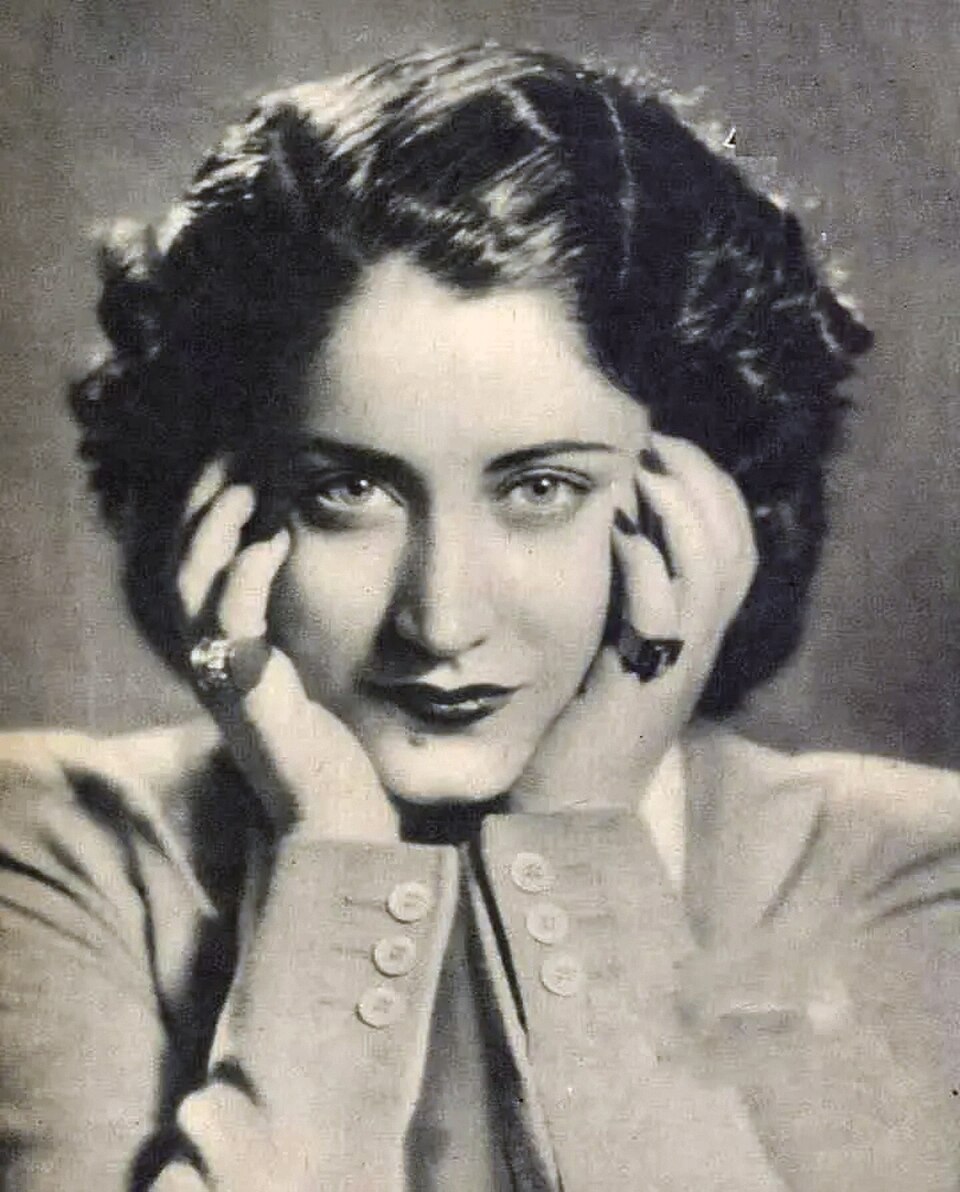
Role and context
Syrian singer and actress; born Amal al-Atrash, one of the most distinctive Arab voices of the twentieth century.
Asmahan belongs to the golden age of Arabic song and musical cinema in Egypt, with a clear Levantine background that makes her biography a meeting point between Egypt and the Levant, and between tarab singing and modern cinematic experimentation.
This profile is linked to The Golden Age of Arabic Music within the Arabic music history timeline.
Biography and life
Asmahan is one of the most concentrated figures in modern Arab song, but her value should not be reduced to mystery or political stories surrounding her life. Born Amal al-Atrash into the Druze al-Atrash family of Jabal al-Druze, she moved with her mother and siblings to Cairo, where her artistic voice took shape inside Egyptian radio, cinema, and the composition industry. She had a wide and dramatic voice capable of carrying the Arabic tarab phrase while also entering more modern expressive and cinematic zones. For that reason, Asmahan differs from the Umm Kulthum model: Umm Kulthum represents long-form tarab architecture and mass command, while Asmahan represents a more dramatic and cinematic voice, highly flexible in moving between Eastern sensibility and modern colors. She performed compositions by major composers, from Mohamed El Qasabgi and Farid al-Atrash to Mohammed Abdel Wahab, Zakariyya Ahmad, and Dawood Hosni, making her a meeting point between multiple Egyptian and Levantine compositional schools. Her relationship with Qasabgi is especially important in works such as Ya Tuyur and Emta Hate‘raf, where her voice becomes a space for melodic experiment and dramatic color. Her film presence was brief but influential: she appeared in Intisar al-Shabab with Farid al-Atrash and then in Gharam wa Intiqam, and died in 1944 in a car accident at the height of her artistic youth. The context of World War II and political stories around her can be mentioned as part of the general legend, but the center of this page is the voice: a rare tarab-dramatic energy that did not have time to fully unfold, yet remained powerfully present in Arab memory.
This profile only uses available Musicatea data: name, alternate name when present, role, linked era, and library sheets when a documented connection exists.
Contributions
- Presented a rare model of an Arabic voice combining Eastern tarab, dramatic breadth, cinematic performance, and modernizing melodic color.
- Served as an artistic bridge between the Syrian/Druze environment and the Egyptian musical scene in Cairo.
- Performed works by major composers such as Mohamed El Qasabgi, Farid al-Atrash, Mohammed Abdel Wahab, Zakariyya Ahmad, and Dawood Hosni.
- Showed with Mohamed El Qasabgi the capacity of her voice for melodic experimentation and modern dramatic writing, especially in Ya Tuyur and Emta Hate‘raf.
- Created a short but influential cinematic presence through Intisar al-Shabab and Gharam wa Intiqam.
- Left a model of a female voice able to combine tarab ornamentation, dramatic clarity, and rapid movement between tenderness and strength within one phrase.
- Her biography remains an example of how a short career can shape artistic memory: a limited number of films and songs, yet enough to create a legendary presence in Arab song history.
Works or related materials
- Ya Tuyur / Taghrid El Balabel — Performer; composed by Mohamed El Qasabgi
One of her most important works, strongly associated with Qasabgi and displaying the dramatic and experimental range of her voice.
- Emta Hate‘raf — Performer; composed by Mohamed El Qasabgi
An important Qasabgi work for her, showing the expressive and dramatic dimension of her performance.
- Layali El Ons Fi Vienna — Performer; composed by Farid al-Atrash
One of her most famous songs, representing the cinematic and international side of her musical image.
- Dakhalet Marra Fi Geneina — Performer
A famous work in her repertoire, useful for showing her lighter and more tarab-oriented side.
- Ya Habibi Ta‘ala Elhaqni — Performer
One of her known works, showing popular romantic and cinematic performance.
- Alayka Salat Allah Wa Salamuh — Performer
An important religious/spiritual work in her repertoire, showing that her voice was not confined to romance and cinema.
- Ya Derti Malek Aleina Lom — Performer; composed by Farid al-Atrash
A work carrying the echo of longing for the Levant and revealing an identity dimension not always visible in her Cairo songs.
- Majnun Layla — Performer with Mohammed Abdel Wahab
A dialogic musical operetta placing her voice directly opposite Abdel Wahab’s school.
- Intisar al-Shabab — Film / actress and performer with Farid al-Atrash
The 1941 film with Farid al-Atrash is important because it joins her cinematic, family, and musical paths.
- Gharam wa Intiqam — Film / actress and performer
Her final film, tied to her death in 1944 and to the last phase of her artistic presence.
Related sheets
Maqam and rhythm links from related sheets: Nahawand, Sama'i Darij (Vals)
Related people
Sources listed in the data
- Ahram Online — Remembering Asmahan, the woman and the legend
Ahram Online
- Ahram Online — Google Doodle commemorates singer Asmahan
Ahram Online
- IMDb — Asmahan
IMDb
- Arab News — Asmahan: The Syrian star who remains forever young
Arab News
- Vogue Arabia — The Life Story of Asmahan Told Through a London Musical
Vogue Arabia
- Musicatea internal comparative profile notes