Person profile
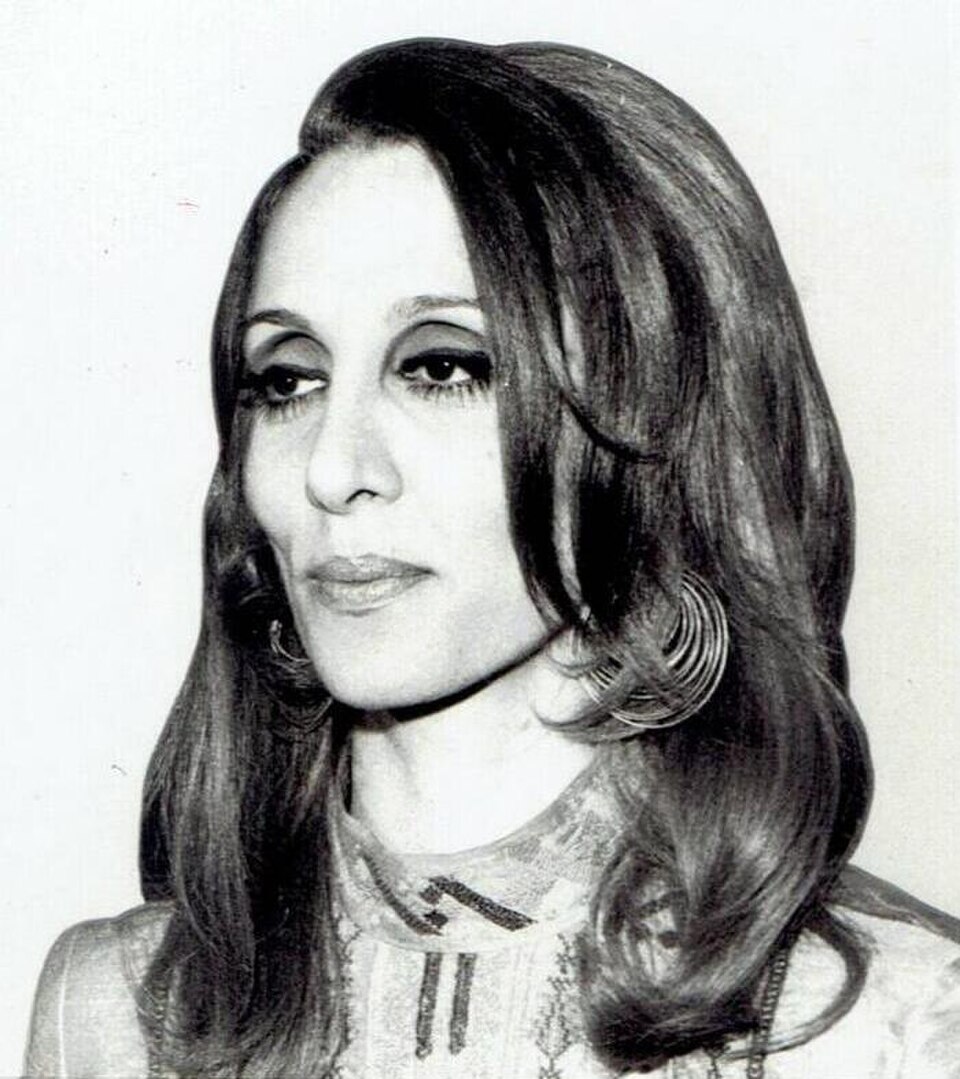
Fairuz
فيروز
Fairuz, born Nouhad Wadie Haddad, is a Lebanese singer and one of the most influential voices in modern Arab music. Her fame became closely tied to the Rahbani Brothers’ project, which brought together short song forms, musical theater, colloquial poetry, Lebanese folklore, and modern orchestration. With her clear and restrained voice, Fairuz helped create a distinctive musical image of Lebanon: village, mountain, morning, nostalgia, love, and homeland. Later, her work with Ziad Rahbani expanded her sound toward a more modern, jazz-inflected, and politically aware language.
- 1934/1935–Years/date
- LebanonPlace
- PersonType
Role and context
Lebanese singer; the voice of the Rahbani project and one of the most influential voices in modern Arab music.
Fairuz represents the Lebanese path within and beyond the golden age: a Rahbani voice, musical theater, short song form, morning memory, and a poetic homeland that extends beyond Lebanon into wider Arab memory.
This profile is linked to The Golden Age of Arabic Music within the Arabic music history timeline.
Biography and life
Fairuz is not merely a great Lebanese singer; she is the center of a complete artistic project: voice, musical theater, radio, Lebanese identity, Arab morning memory, and an aesthetic idea of village, homeland, nostalgia, love, and city. Nouhad Wadie Haddad was born in Beirut in the 1930s; sources differ between 1934 and 1935, so her date is presented here cautiously. Her rise became linked to the Rahbani Brothers through radio in the 1950s: Radio Lebanon, the Near East Radio, and Radio Damascus, before the trio’s reputation was consolidated at the Baalbek Festival in 1957 through the Lebanese Nights. With the Rahbanis, Fairuz did not simply perform separate songs; she became the voice of an entire world: village, mountain, stranger, waiting, travel, homeland, love, authority, and social satire. Her strength differs from the Umm Kulthum model. Umm Kulthum built her legend around the long concert, improvisation, and tarab escalation, while Fairuz created another kind of power: shorter song, condensed poetic image, transparent voice, and a less demonstrative, more suggestive expression. In this way, Fairuz helped make Lebanese dialect and Lebanese imagination part of wider Arab memory, not only a local matter. Later, with Ziad Rahbani, her voice moved toward a more urban, jazz-inflected, and political world, marked by complex harmony, bitter satire, and everyday Lebanese language after the earlier Rahbani village universe. On Musicatea, Fairuz appears as the voice of a project rather than a single isolated voice: a voice that gave the Rahbani project its aesthetic and popular legitimacy, then carried that voice into later transformations with Ziad.
Contributions
- Established with the Rahbani Brothers a modern Lebanese model in Arabic song, based on short song forms, Lebanese dialect, theater, reconstructed folklore, and Lebanon’s aesthetic identity.
- Offered a model distinct from Umm Kulthum: transparent voice, expressive economy, condensed poetic image, and shorter songs capable of creating a full scene.
- Stood at the center of one of the most important experiments in modern Arab musical theater, where song cannot be separated from dialogue, character, village, and national memory.
- Made modern Lebanese song part of wider Arab memory and carried Lebanese dialect into a broad Arab listening space.
- Turned her voice into a daily listening ritual in the Arab world, especially through the image of Fairuz in the morning, at home, in cafés, and on radio.
- Presented an emotional model of national song based not only on rhetoric, but on homeland as village, mountain, road, absence, and waiting.
- In the Ziad Rahbani period, moved toward a more modern language marked by jazz, complex harmony, everyday text, politics, and urban satire.
Works or related materials
- Itab — Performer; early Fairuz/Rahbani work
One of the important early works in Fairuz and the Rahbanis’ career; Britannica notes it as the first song they recorded for Radio Damascus.
- Nassam Alayna El Hawa — Performer
One of her most famous songs and a central entry into the Rahbani sound of Lebanese nostalgia.
- Kan Enna Tahoun — Performer
An excellent work for representing the village image and popular memory in the Rahbani project.
- Zahrat Al Mada’en — Performer
A central work in Fairuz and the Rahbanis’ Arab, Palestinian, and Jerusalem-related repertoire.
- Bhebak Ya Lebnan — Performer
A central Lebanese national song, especially in the context of war and national memory.
- Sanarji‘u Yawman — Performer
A song of nostalgia and return, revealing Fairuz as a voice of memory, exile, and waiting.
- Raji‘oun — Performer
A work connected to Palestine and return, useful for understanding the Arab dimension of Fairuz’s voice.
- Bektob Ismak Ya Habibi — Performer
A widely popular work representing the condensed Rahbani romantic song.
- Saalouni El Nass — Performer; composed by Ziad Rahbani
An important work because it marks an artistic and family transition after Assi’s illness and the beginning of Ziad’s presence in Fairuz’s world.
- Kifak Inta — Performer; Ziad Rahbani period
Represents the later Fairuz: less folkloric, more urban and subjective.
- Wahdon — Performer; Ziad Rahbani period
A key work in her move toward a more modern and jazz-inflected color.
- Baya‘ El Khawatem — Musical play/film; performer and actress
One of the most famous Rahbani works tied to the theatrical Lebanese village image.
- El Mahatta — Musical play; performer and actress
An important work around waiting, travel, and social illusion, representing the maturity of Rahbani theater.
- Mays El Reem — Musical play; performer and actress
One of the most famous Rahbani plays and part of public memory.
- Jibal El Sawwan — Musical play; performer and actress
A major theatrical work involving homeland, authority, and heroism.
- Al Shakhs — Musical play; performer and actress
An important theatrical work with symbolic criticism of power and bureaucracy.
- Sah El Nom — Musical play; performer and actress
One of the most popular Rahbani works, concentrating the relation between voice, authority, people, and social satire.
Related people
Sources listed in the data
- Encyclopaedia Britannica — Fairuz
Encyclopaedia Britannica
- Encyclopaedia Britannica — Rahbani Brothers
Encyclopaedia Britannica
- Reuters / AP / Washington Post — Ziad Rahbani reports and obituaries
- Discogs / MusicBrainz / official Fairuz channels
- Arabic critical sources on Rahbani musical theater
- Musicatea internal comparative profile notes