Person profile
Mohamed El Qasabgi
محمد القصبجي
Mohamed El Qasabgi was an Egyptian composer and oud player, and one of the major innovators of twentieth-century Arab music. Closely associated with Umm Kulthum, Asmahan, Layla Murad, and Mounira al-Mahdiyya, he was not merely an accompanist-composer for great voices; he developed a distinct school of composition and oud performance that combined an oriental musical sensibility with carefully structured melodic writing and selective Western techniques.
- 1892–1966Years/date
- EgyptPlace
- PersonType
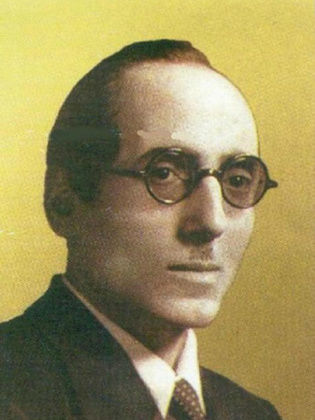
Role and context
Egyptian composer, oud player, and musician; a major innovator of the Arabic vocal monologue and modern oud school.
Qasabgi represents an experimental line in early modern Arabic song: the vocal monologue, oud, melodic drama, and modernization from within eastern maqam.
This profile is linked to The Golden Age of Arabic Music within the Arabic music history timeline.
Biography and life
Mohamed Ahmed El Qasabgi was born in Cairo in 1892 and grew up in a musical household: his father was an oud player, composer, and oud teacher. He should not be reduced to being only a composer for Umm Kulthum; he was a major oud player, an experimental composer, and the author of a distinct school in the construction of the Arabic vocal monologue. Known as Sultan al-Oud, he was associated with major singers including Umm Kulthum, Asmahan, Fathiya Ahmad, Mounira al-Mahdiyya, and Layla Murad. His importance lies in expanding the possibilities of Arabic song from within. He preserved maqam and Eastern musical sensibility, yet brought greater precision to song structure, broader orchestral coloring, and a dramatic sense that allowed melody to move with the meaning of the text rather than simply repeat it. In his works for Umm Kulthum, especially In Kunt Asameh and Raqq El-Habib, one can hear the move from older repetitive forms toward a continuous and more dramatic melodic construction. In his works for Asmahan, such as Ya Tuyur and Emta Hate‘raf, bold vocal color and dramatic imagination become central. In cinema, his melodic language reached Layla Murad through works such as Ana Albi Dalili. His innovation is best understood as modernization from within an oriental logic rather than artificial Westernization: he introduced more organized tools and techniques while remaining tied to oud, maqam, and Arabic phrasing. His later silence is also important: after his role as a principal composer for Umm Kulthum declined, he remained present on stage as the oud player in her ensemble, becoming a reference point inside the memory of Kulthum's performance ritual itself.
This profile only uses available Musicatea data: name, alternate name when present, role, linked era, and library sheets when a documented connection exists.
Contributions
- Developed the Arabic vocal monologue, especially through In Kunt Asameh with Umm Kulthum in 1927, moving away from traditional repetition toward continuous and more dramatic melodic construction.
- Was one of the major oud players of the twentieth century, representing an important line in the history of the oud as well as Arabic song.
- Established a central artistic relationship with Umm Kulthum during her rise and early artistic formation through works such as In Kunt Asameh, Raqq El-Habib, and songs from the film Widad.
- Created a distinctive compositional language for Asmahan, especially in Ya Tuyur and Emta Hate‘raf, where dramatic imagination and vocal color are strongly present.
- Introduced Western elements organically and selectively, not through artificial borrowing, so his modernization remained rooted in oriental logic and Arabic maqam.
- Left a major impact on oud playing; musicians such as Mohammed Abdel Wahab, Riyad al-Sunbati, and Farid al-Atrash studied with him or were influenced by him.
- Represented a rare case in the Arabic takht: a major composer who remained present as Umm Kulthum's oud player, making his presence part of the Kulthum performance ritual.
Works or related materials
- In Kunt Asameh Wa Ansa El-Asiya — Composer for Umm Kulthum
A central work in the history of the Arabic vocal monologue, presenting Qasabgi as an innovator of form rather than a conventional composer.
- Raqq El-Habib — Composer for Umm Kulthum
One of his best-known compositions for Umm Kulthum, showing long, delicate melodic construction and deep handling of her voice.
- Ya Tuyur / Taghrid El-Balabel — Composer for Asmahan
An important work for understanding Qasabgi's relationship with Asmahan's voice and his dramatic melodic imagination.
- Emta Hate‘raf — Composer for Asmahan
One of the works that reveals the expressive and dramatic side of his style.
- Ana Albi Dalili — Composer for Layla Murad
A famous cinematic song linking him to film and refined light song.
- Songs from Widad — Composer for Umm Kulthum / musical cinema
Important because they connect him to cinema and to an early phase of Umm Kulthum's film presence.
- Oud taqasim and instrumental pieces from the AMAR archive — Instrumental and archival works
A general entry highlighting his identity as an oud player and experimental instrumental composer, not only a song composer.
- Qal Eh Half Ma Yekallemnish — Composer for Umm Kulthum
One of the early collaborations between Qasabgi and Umm Kulthum in the 1920s.
- El-Shak Yehyi El-Gharam — Composer for Umm Kulthum
One of his notable monologues, showing his dramatic construction of the phrase.
- Meen Yeshteri El Ward Menni — Composer for Layla Murad
Shows his light and elegant cinematic side.
Related sheets
Maqam and rhythm links from related sheets: Ajam, Sama'i Darij (Vals)
Related people
Sources listed in the data
- AMAR Foundation — CD Qasabgi
AMAR Foundation
Source - Ahram Online — Remembering Qasabgi: Master of Masters
Ahram Online
Source - Al Jazeera — Qasabgi article
Al Jazeera
Source - Majalla — How Umm Kulthum changed the landscape of Arabic music
Al Majalla
Source - Arab America — Remembering Qasabgi: Master of Masters
Arab America
Source