Person profile
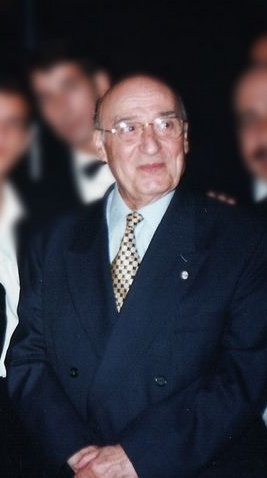
Wadih al-Safi
وديع الصافي
Wadih al-Safi was one of the most important voices in Lebanese and Arab music. He combined tarab, mawawil, and Lebanese mountain song, helping turn village life, landscape, memory, and longing into central themes of modern Lebanese musical identity. His voice became more than a beautiful performance style; it became a musical symbol of Lebanon itself.
- 1921–2013Years/date
- LebanonPlace
- PersonType
Role and context
Lebanese singer and composer, one of the defining voices of Lebanese song, known for mawawil, ʿataba, mijana, Abu el-Zuluf, and Lebanese mountain song.
Wadih al-Safi represents one of the pillars of the Lebanese path in twentieth-century Arabic song, especially the line of the mountain voice, mawwal, and local identity open to the Arab audience.
This profile is linked to The Golden Age of Arabic Music within the Arabic music history timeline.
Biography and life
Wadih al-Safi was born Wadih Bishara Yousef Francis in Niha, in Lebanon’s Chouf region, in 1921. His artistic path began early, when he entered a Lebanese Radio singing competition as a teenager and won, giving him the public platform that launched his professional career. His importance lies in the way he combined Arab tarab with Lebanese mountain and rural expression. He did not treat folk material as a static archive; he reshaped it for radio, theatre, recordings, and concert performance. This is why his name became closely associated with mawawil, ʿataba, mijana, Abu el-Zuluf, and songs of village, home, land, and longing. In the late 1940s he travelled to Brazil, where he sang for Lebanese diaspora communities. This experience matters because nostalgia, homeland, and return were not only poetic themes in his work; they also spoke directly to emigrant audiences. From the late 1950s onward, al-Safi became part of a wider Lebanese musical revival alongside the Rahbani Brothers, Philimon Wehbe, Zaki Nassif, Fairuz, Sabah, and Nasri Shamseddine. In this context, Baalbeck festivals, radio, and musical theatre helped move Lebanese song from local tradition to a wider Arab stage. Across his long career, Wadih al-Safi sang thousands of songs and performed in several languages, including Arabic, Syriac, French, Portuguese, and Italian. Titles such as «Voice of Lebanon» and «Singer of the Cedars» reflect not only his fame, but his symbolic place in Lebanese cultural memory. After the Lebanese Civil War, he lived and worked between Lebanon, Egypt, and France, and remained artistically present until his death in 2013.
This profile only uses available Musicatea data: name, alternate name when present, role, linked era, and library sheets when a documented connection exists.
Contributions
- Helped establish Lebanese mountain and rural song in modern Arab musical memory.
- Brought mawawil, ʿataba, mijana, and Abu el-Zuluf into radio, theatre, recording, and concert settings.
- Contributed to modern Lebanese musical identity alongside the Rahbani Brothers, Philimon Wehbe, Zaki Nassif, Fairuz, Sabah, and Nasri Shamseddine.
- Bridged oral folk expression and modern song production.
- Made village, mountain, home, and longing central themes in Lebanese and Arab listening culture.
- Influenced later Lebanese singers who combined tarab, Lebanese dialect, and mountain-style vocal expression.
Works or related materials
- Lebanon Ya Ot’et Sama — Patriotic/Lebanese song
One of the songs most strongly tied to Lebanese land and identity.
- Tallu Hbabna — Popular Lebanese song
Shows his ability to turn simple folk expression into widely loved performance.
- ʿandak Bahriyya — Well-known song
Shows the lighter, audience-friendly side of his repertoire.
- Ya Ibni — Emotional/family song
Reflects the themes of longing and family feeling in his work.
- ʿAtaba, Mijana, and Abu el-Zuluf — Vocal forms
Not one song, but key forms for understanding his vocal identity.
Related sheets
Maqam and rhythm links from related sheets: Bayati A (Husayni), secondary Zanjaran, Wahda Kabira, Zaffa